

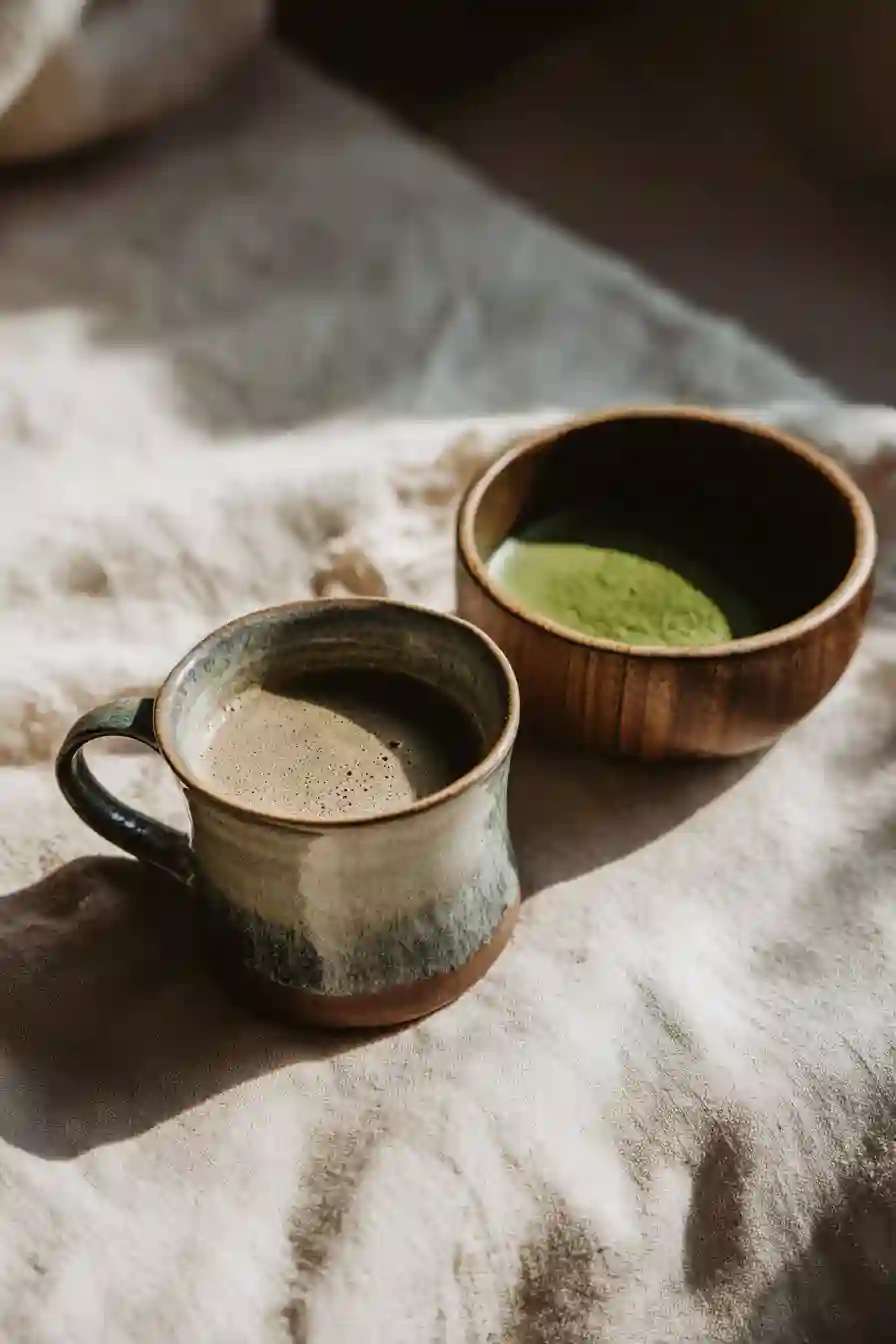
Mushroom Coffee vs Matcha—this debate landed squarely in my kitchen the moment I hit my late thirties. As a 39-year-old mom of two, nutrition coach, and full-time multitasker, I was desperate to upgrade my morning brew. Between school drop-offs, coaching sessions, and endless laundry, I needed energy that didn’t crash by noon.
At first, I was loyal to matcha. Its clean green color and gentle caffeine kept me alert… kind of. But then came the jitters. And the crashes. A client mentioned mushroom coffee—something I’d written off as too trendy—so I finally tried Ryze. That changed everything. No anxiety. No crashes. Just smooth, focused mornings.
I’ve tested both brews for weeks, mixing, sipping, even blending them into smoothies. And today, I’m breaking it all down: mushroom coffee vs matcha for energy, focus, benefits, and even taste. If you’re stuck choosing between these wellness superstars, I’ve got you.
Let’s settle the mushroom coffee vs matcha battle—once and for all.
Table of Contents
Disclaimer: This post contains affiliate links. If you click and make a purchase, I may earn a small commission—at no extra cost to you. I only recommend products I personally use or trust.
Origins & Composition
What is Mushroom Coffee?
Mushroom coffee is a functional blend of ground coffee beans and medicinal mushroom extracts like lion’s mane, cordyceps, reishi, and chaga. Unlike traditional coffee, it’s designed to deliver a balanced energy boost without the jitters. Companies like Ryze have made mushroom coffee more accessible by creating instant blends that dissolve easily in water or milk, offering both flavor and benefits in one scoop.
The origins of mushroom coffee trace back to ancient Eastern medicine. Mushrooms have long been used to support immunity, cognition, and stamina. Today, brands formulate modern versions that combine mushrooms and light-roast coffee for smoother digestion, improved focus, and less acidity.
This makes mushroom coffee a compelling option in the mushroom coffee vs matcha conversation. It’s not just a trendy blend—it’s a wellness ritual grounded in centuries of tradition, now backed by modern science.
What is Matcha?
Matcha is a finely ground powder made from specially grown green tea leaves. Unlike steeped tea, you consume the whole leaf, which means a more concentrated source of antioxidants and nutrients. It originated in Japan and has been a staple in ceremonies and everyday life for centuries.
Matcha contains a moderate amount of caffeine but also delivers L-theanine, an amino acid known for promoting calm and focus. This combo provides a gentle energy lift that’s more stable than traditional coffee—one of the reasons matcha has earned such a devoted following.
In the mushroom coffee vs matcha showdown, matcha shines with its purity, clean caffeine, and vibrant green hue that’s become iconic in wellness circles.
Energy & Focus Comparison
Which One Gives More Sustained Energy?
If you’re choosing between mushroom coffee vs matcha for long-lasting energy, both offer advantages—but in different ways.
Mushroom coffee typically contains less caffeine than regular coffee (about 40–60 mg per serving). However, thanks to adaptogens like cordyceps and lion’s mane, it supports steady energy throughout the day. These mushrooms help regulate stress responses, meaning you’re less likely to crash after your morning cup.
Matcha, on the other hand, has around 30–70 mg of caffeine per cup, depending on quality and preparation. The real magic is in its L-theanine content. This amino acid slows the release of caffeine, creating a gradual energy lift that lasts for hours without the sharp spike-and-drop that coffee often causes.
Still, for many users, mushroom coffee vs matcha comes down to tolerance. If you’re sensitive to caffeine or want additional immune or brain support, mushroom coffee may be the gentler long-term option.
👉 Try Ryze Mushroom Coffee here if you want smoother energy without the crash.
What About Jitter-Free Focus and Calm?
When it comes to clarity and calm, both brews excel—but again, in slightly different ways.
Matcha is celebrated for promoting alpha brain waves, thanks to the synergy between caffeine and L-theanine. It boosts alertness while simultaneously reducing anxiety—perfect for focused work or meditation.
Mushroom coffee supports focus through nootropic mushrooms like lion’s mane, which studies show may promote neurogenesis and cognitive function. Add in reishi or chaga, and you also get a calming effect that balances out any stimulant side effects.
If you’re deciding on mushroom coffee vs matcha for mental clarity, both are excellent—but mushroom coffee may provide broader benefits over time.
Health Benefits
Antioxidants, Gut Health, and Adaptogens
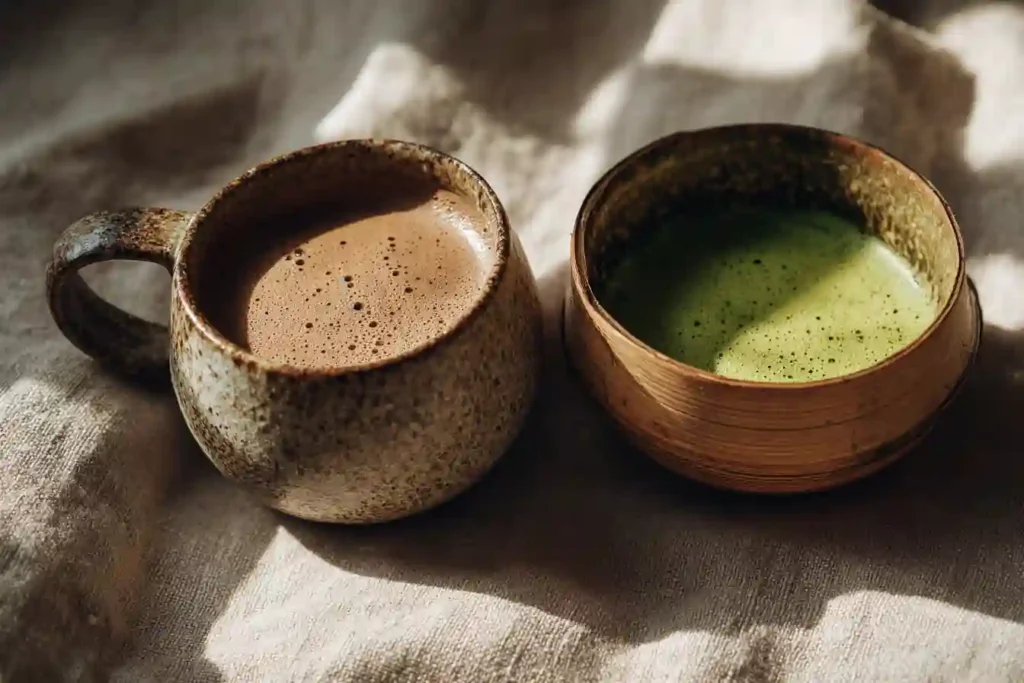
Both mushroom coffee and matcha are packed with antioxidants—but their sources differ. Matcha contains a potent compound called EGCG (epigallocatechin gallate), which helps fight free radicals and supports cardiovascular health. It’s one of the main reasons matcha is considered a superfood.
Mushroom coffee shines in a different way. It includes adaptogenic mushrooms like reishi, chaga, and cordyceps, which help the body adapt to stress and support immune function.
Some of these mushrooms also support digestion and gut balance—especially reishi and turkey tail, which are linked to improved gut microbiota.
So, in the mushroom coffee vs matcha discussion, matcha may lead in antioxidant density, but mushroom coffee wins when it comes to overall adaptogenic and gut-supporting properties.
Weight Loss, Anxiety, and Inflammation Support
When it comes to weight management, both drinks can play a role. Matcha boosts metabolism and helps burn fat, making it a popular pre-workout drink. Mushroom coffee, especially those blends containing cordyceps, may also support stamina and fat metabolism—though the effects are more gradual.
For anxiety, matcha’s L-theanine is a superstar. It provides calm focus without sedation, helping reduce stress during demanding days. However, mushroom coffee is no slouch here. Reishi is widely known for promoting relaxation, and lion’s mane is being studied for its role in reducing symptoms of anxiety and depression.
Inflammation-wise, both drinks are anti-inflammatory. Matcha fights oxidative stress, while mushrooms like chaga and turkey tail contain beta-glucans and antioxidants that soothe internal inflammation.
Bottom line? Mushroom coffee vs matcha isn’t just about energy—both offer impressive health benefits depending on your needs.
Taste, Preparation & Cost
Taste Profile and How to Prepare Each
When comparing mushroom coffee vs matcha, flavor can be a deal-breaker—or a deal-maker.
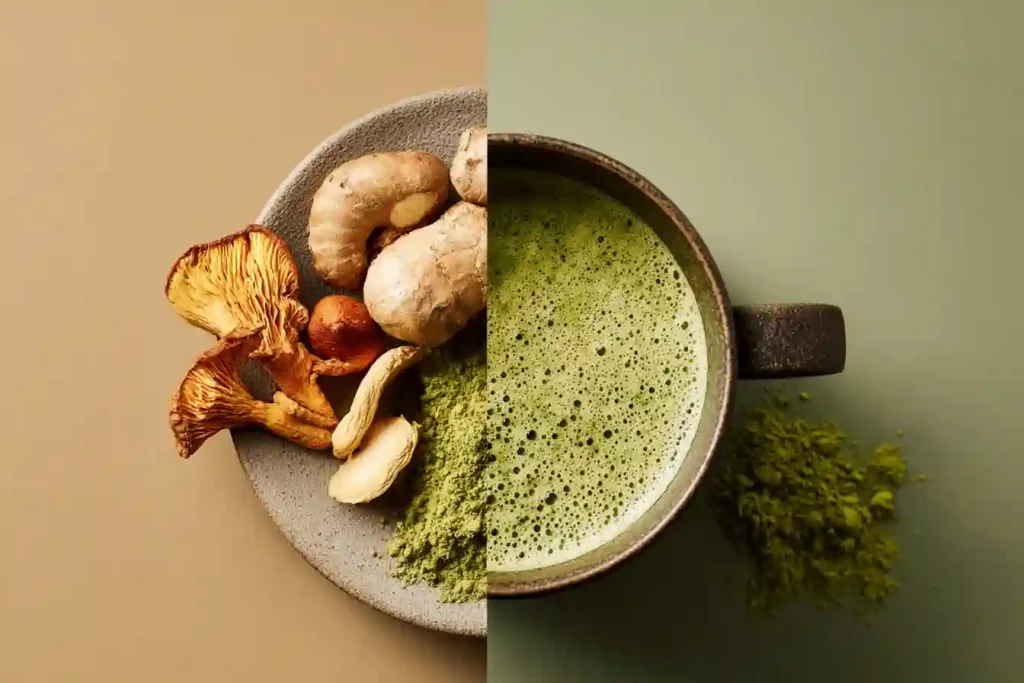
Mushroom coffee has a mild, earthy taste, similar to light-roast coffee but less bitter. Ryze, for example, includes MCT oil and coconut milk powder, which makes the drink smooth and creamy when mixed with hot water or milk alternatives. It dissolves instantly, and many fans like to froth it with oat milk or blend it into smoothies.
Matcha, on the other hand, has a grassy, slightly bitter profile. High-quality ceremonial grade matcha is more mellow, while culinary grade is stronger and more robust. Matcha is traditionally whisked with hot water, but it also blends beautifully into lattes and cold drinks.
So, when it comes to mushroom coffee vs matcha, your preference may come down to whether you enjoy richer, coffee-like notes or the earthy freshness of green tea.
Price per Serving + Subscription Details
Both drinks are premium wellness products—but how do they compare in cost?
Here’s a quick breakdown:
| Feature | Mushroom Coffee | Matcha |
|---|---|---|
| Avg. Price per Serving | $1.20 | $1.00 |
| Subscription Savings | 15% off with Ryze | 5–10% on some brands |
| Free Gift | Starter Mug + Guide | None |
When weighing mushroom coffee vs matcha on cost, mushroom coffee may be slightly higher per serving—but the added functional ingredients and bonuses often make up for it.
Is mushroom coffee or matcha better for energy?
Both are excellent, but in different ways. Mushroom coffee offers sustained energy with less caffeine and no jitters, thanks to adaptogens like cordyceps. Matcha provides a calm energy lift due to its combination of caffeine and L-theanine.
Which is better for stress and focus?
Mushroom coffee contains lion’s mane and reishi, known to support brain clarity and calmness. Matcha’s L-theanine is ideal for reducing anxiety and improving focus. Both are great for mental clarity depending on your preferences.
Can I drink both in the same day?
Yes! Many wellness lovers enjoy mushroom coffee in the morning and matcha in the afternoon. Just be mindful of your total caffeine intake.
Which is more beginner-friendly?
Matcha has a learning curve in terms of prep and taste. Mushroom coffee is more user-friendly—it dissolves instantly, tastes like a light latte, and comes with ready-to-use starter kits like Ryze.
Real-Life Experience: Why I Switched from Matcha to Mushroom Coffee
“I was skeptical at first, but after trying both, I noticed mushroom coffee helped with my gut and focus in a way matcha didn’t. That creamy, earthy flavor? Totally addictive. I still enjoy matcha occasionally, but Ryze has become part of my morning ritual.”
— Jessica K., Nutrition Coach and Mom of 2
Final Verdict: Mushroom Coffee vs Matcha—Which One Should You Choose?
When it comes to mushroom coffee vs matcha, the “better” option depends on your goals. If you’re looking for gut support, stress reduction, and focus-boosting adaptogens, mushroom coffee may be your best match. If antioxidant power and calm energy are your top priorities, matcha is a strong contender.
👉 Looking for a high-quality matcha? Check out this top-rated ceremonial grade Matcha on Amazon — my favorite pick for calm, clean energy.
Still unsure? You can check out the full Ryze Mushroom Coffee Benefits or compare effects in the Ryze Mushroom Coffee Side Effects article. Or if you’re already a Ryze fan, blend it into a delicious Ryze Smoothie Recipe for the best of both worlds.
→ Choose your energy wisely—and sip what serves you.
👉 Whether you lean green with Matcha or earthy with Mushroom Coffee, the best choice is the one that fuels your lifestyle. I personally keep both in my pantry—Ryze for focused mornings, Matcha for calm afternoons.